Demystifying Iguana for Healthcare Integration Teams
Confused about Iguana? This post explains what Iguana is (and is not), and how it helps teams build reliable, scalable EHR integrations.
Iguana is an integration engine used to build and manage healthcare interfaces.
Teams use Iguana as the integration layer between systems like EHRs, billing platforms, internal services, and external partners, especially when reliability and scalability matter.
The simplest way to describe Iguana
When people discover Iguana for the first time, they are often thinking about one of three models:
- An integration platform (toolkit)
- A managed integration service
- A connector marketplace
Iguana is an integration platform. That means Iguana gives your team the tools to implement and run integrations in production, rather than being a prebuilt connector library or a service that connects everything for you.
What Iguana helps you do
Iguana is commonly used to:
- Connect to EHRs using APIs and HL7
- Transform and normalize data into the format your application needs
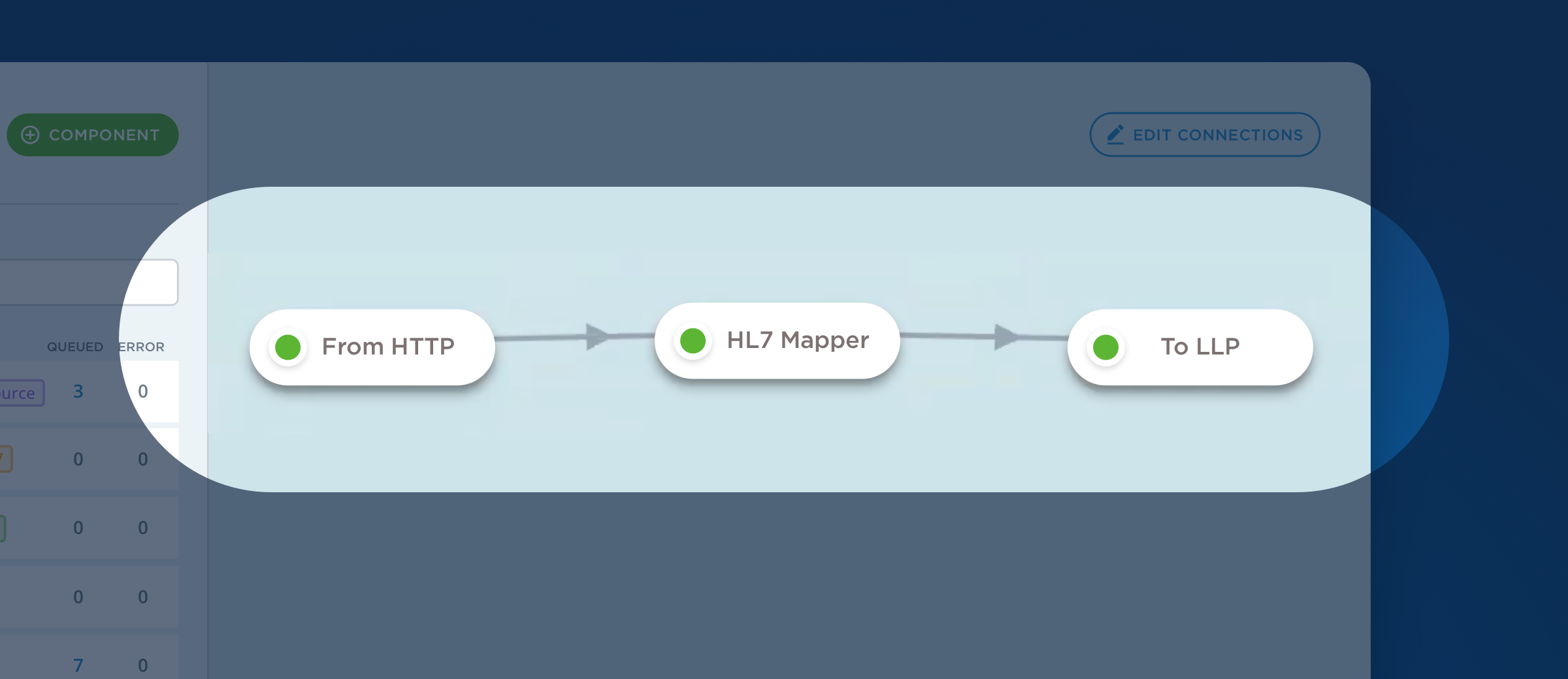
- Route data to downstream systems reliably
- Monitor traffic and troubleshoot issues
- Handle retries, error workflows, and operational visibility
What Iguana does not try to be
There are a few adjacent categories that often come up in EHR integration conversations.
Iguana is not a connector marketplace
Some solutions focus on prebuilt connectors that are designed to be switched on quickly.
Iguana is different. It is built for teams that want to implement integration logic that matches their exact workflow and data requirements.
Iguana is not a managed integration service
Some teams are looking for a fully managed service where a vendor builds and operates integrations on their behalf.
With Iguana, the integration layer is typically owned and operated by your team (or an implementation partner), using Iguana as the platform.
A common real-world example multi-practice onboarding
A common use case is a vendor onboarding many independent practices, where multiple practices may use the same EHR.
In this model, the scalable approach is usually:
- Build the EHR integration pattern once
- Onboard each practice as a repeatable tenant configuration
- Operate centrally as you grow
Even when practices share the same EHR product, each practice often has its own tenant, credentials, permissions, and workflow differences. Iguana is designed to support that reality cleanly.
Quick FAQ
Can we integrate once and support many practices?
Yes. Most teams build a reusable integration pattern for an EHR, then onboard each practice using tenant-specific configuration such as credentials and endpoints.
Who builds the EHR integration logic?
Typically your team, or an implementation partner you work with. Iguana provides the platform to build, run, and support that integration logic in production.
Is it one connection per EHR or per practice?
Usually per practice tenant, since each practice has its own environment and authorization.
Do we need an EHR vendor agreement for API access?
It depends on the EHR vendor. Many teams start with practice-authorized access, and some vendors require additional agreements as usage scales.
How does Iguana pricing scale?
Iguana pricing can be structured to match your rollout model and throughput. If you share the EHRs you are targeting and expected volume, we can recommend an approach that fits.
Summary
Iguana is an integration engine and development platform for building and operating healthcare interfaces.
If you are building an EHR integration layer and want a reliable way to implement, manage, and scale those connections, Iguana is designed for that job.